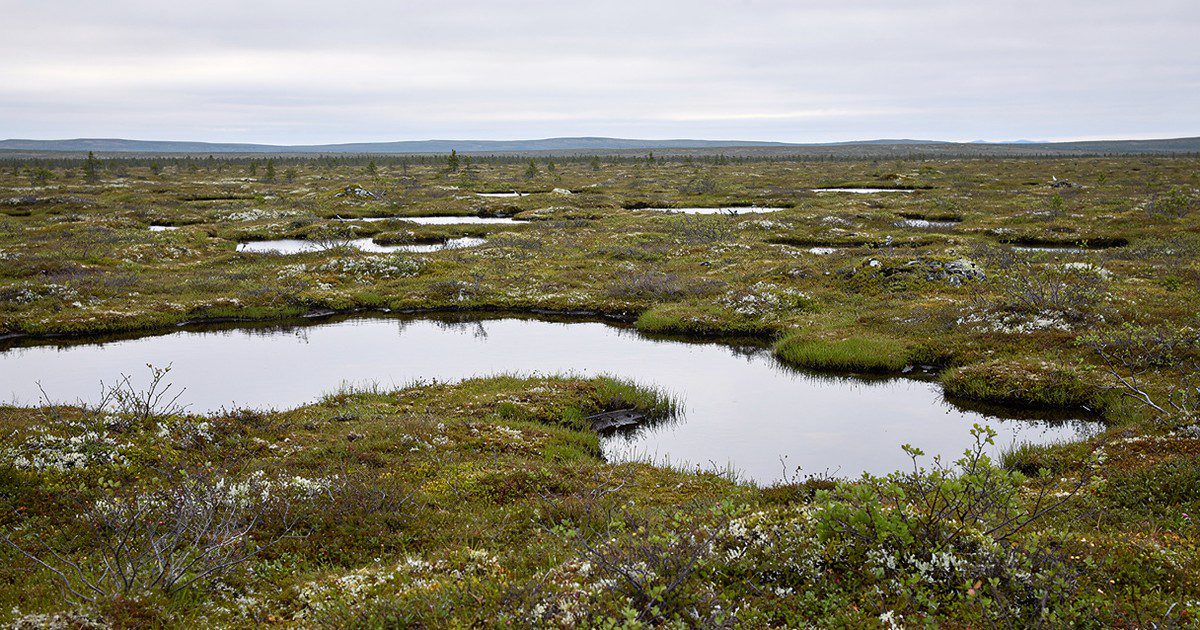
TOEFL Academic Reading Practice: Peatlands and Carbon Storage
Practice Read an Academic Passage with this TOEFL academic reading lesson on peatlands and carbon storage. Read one original passage and answer five questions about meaning, detail, purpose, and inference.
Build vocabulary for materials and change, learn how past participle phrases identify what an action affects, and learn to recognize factual-detail questions and verify the relationships stated in the passage.
Materials, storage, and change
These ten words describe stored materials and changes in their condition.
KEY WORDS
peat (noun)
Soil material formed from partly decayed plants in wet conditions. Synonyms: turf, humus
The sample contained dark peat beneath the surface.
saturated (adjective)
Holding as much liquid as it can absorb. Synonyms: soaked, waterlogged
The saturated sponge left a puddle on the counter.
to accumulate (verb)
To build up gradually over time. Synonyms: to collect, to build up
Small donations accumulated over several months.
to decay (verb)
To break down gradually through natural processes. Synonyms: to rot, to decompose
The fallen fruit began to decay in the basket.
drainage (noun)
The removal or flow of excess water from a place. Synonyms: draining, outflow
The playground needs better drainage after heavy rain.
to release (verb)
To let a substance move out of a container or place. Synonyms: to let out, to discharge
Open the valve slowly to release the steam.
to retain (verb)
To keep something rather than lose it. Synonyms: to keep, to hold
This fabric can retain moisture after washing.
layer (noun)
A quantity of material covering a surface or lying between other materials. Synonyms: covering, stratum
A thin layer of dust covered the shelf.
to restore (verb)
To bring something back to an earlier condition. Synonyms: to renew, to repair
The conservator worked to restore the faded painting.
reservoir (noun)
A place or material in which a supply is stored. Synonyms: store, reserve
The tank serves as a reservoir of water for the garden.
GRAMMAR FOCUS
Past participle phrases after nouns
Academic sentences can identify a thing by describing what has happened to it. A past participle phrase after a noun provides that function without a full relative clause. Keeping the noun attached to its description helps you avoid giving an action to the wrong participant.
[noun phrase] + [past participle phrase]
The noun receives the action: letters sent yesterday means letters that were sent yesterday. Some participles are irregular, as in written and chosen. Note that the verb is not the main verb of the sentence.
The tickets booked last week are still valid.
A recipe written by my grandmother is pinned to the fridge.
We compared the proposals submitted before Friday.
The path damaged during the storm has reopened.
The photographs chosen for the exhibition show everyday life.
Material collected from the shoreline was sent to a laboratory.
TEST TIP
Factual detail: preserve the stated relationship
Recognize the question. An introductory clause such as “According to the passage, why …?” asks you to find a stated explanation. This is a factual-detail question: the answer is given in the passage, sometimes in different words.
Answer it. Find the relevant detail and read its context. Choose the answer that preserves who or what is involved and the relationship the passage states.
Example question
At a branch library, popular books often remained unavailable after their loans expired. Staff considered reducing the standard loan period but instead began sending reminders several days before each due date. The loan period and number of copies stayed the same. In the following months, a larger share of borrowed books came back by the deadline, allowing copies to pass to the next people on waiting lists with fewer delays. The library later extended the return desk’s hours, but waiting times had already declined before that change.
According to the description, what most directly reduced the waiting time for popular books?
Why the other choices fail
A — Why it does not answer the question. Staff considered shortening the loan period, but it stayed the same.
C — Why it does not answer the question. The passage says timely returns shortened the wait, not that shorter waits caused timely returns.
D — Why it does not answer the question. The desk hours changed after waiting times had already declined, so they cannot explain that decline.
TASK PRACTICE
Read an Academic Passage practice
Read the passage and choose one answer for each question. Keep the passage available as you work. You may move between questions and change your choices before revealing the key. This practice simulates the TOEFL Read an Academic Passage task, with one complete passage and five questions.
One academic passage of about 200 words and five questions. On the test the passage stays on screen while one question appears at a time, with four written choices each. Choose one answer for every question and move forward within the time given for the module.
The Carbon Beneath a Peatland
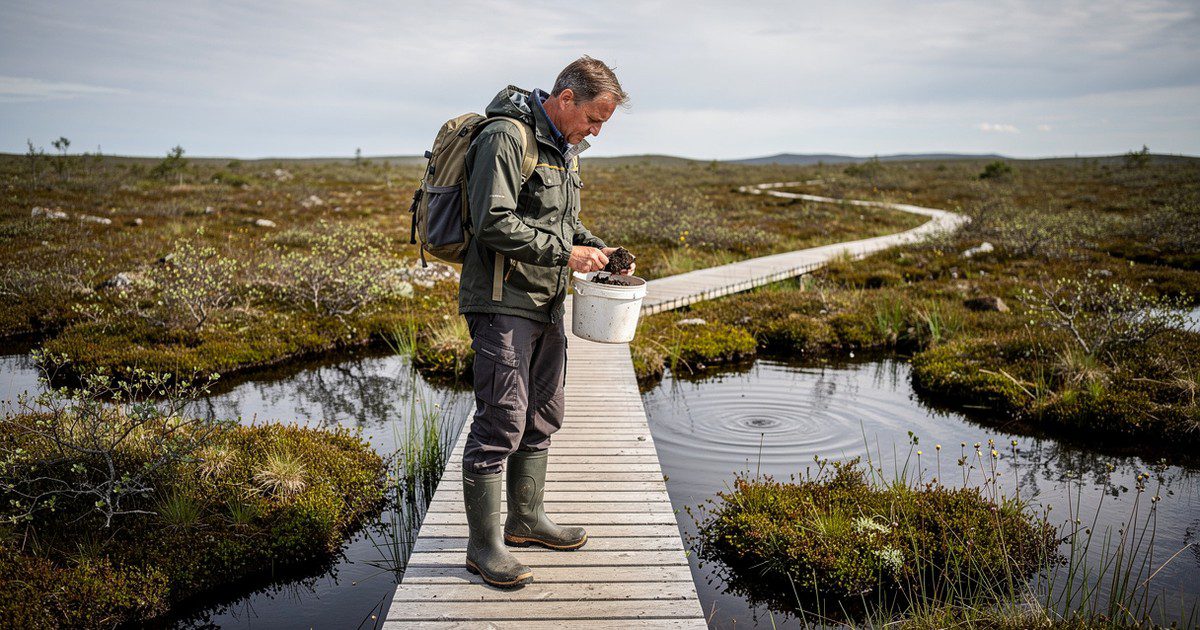
Peatlands are wetlands where partly decayed plant material accumulates as peat. Growing plants absorb carbon from the atmosphere, but that carbon’s survival below ground depends on what happens after the plants die. In saturated soil, little oxygen is available to organisms that break down the remains. Decay therefore proceeds slowly enough that new material arrives faster than old material disappears. This imbalance accounts for the gradual development of carbon-rich layers.
Draining a peatland for farming changes the balance by allowing more oxygen into the soil. For example, an area covered with growing crops can still lose carbon from peat beneath the surface. The plants above ground continue to absorb carbon, while older material exposed to air decomposes more rapidly and releases carbon dioxide. The presence of vegetation alone therefore does not establish that the buried store is being preserved.
Restoration work may involve blocking drainage channels to raise water levels. Although rewetting can reduce further loss from the remaining peat, it does not immediately replace the layers that have accumulated over centuries. The objectives of protecting an existing store of peat and constructing a new one are related but operate on different timescales. Hence, when assessing recovery, it is necessary to take into account both the condition of the soil and the plants visible above it.
The phrase “accounts for” in paragraph 1 is closest in meaning to
According to paragraph 1, why can plant material build up in peatlands?
Why does the author mention an area covered with growing crops in paragraph 2?
What distinction does paragraph 3 make about restoration?
Two restored peatlands now have similar vegetation and water levels. What can be inferred from the passage?
Reveal the answer key
1. C · 2. A · 3. D · 4. B · 5. C
Review your reading
After completing all the questions, use the passage and answer key to review your choices. Apply these checks to correct answers as well as mistakes: a correct guess still needs an explanation. Use what you find to choose one skill to practice next.
What this TOEFL academic reading practice developed
This peatlands reading practice connected details about a process with its explanation and limits. The five questions required attention to relationships as well as individual words.
You learned how past participle phrases identify what an action affects. You also practiced recognizing factual-detail questions and choosing an answer that preserves the relationships stated in the passage.
Next lesson: Water Clocks
CONTINUE PRACTICING
Access the complete lesson deck
Turn this lesson into a class-ready sequence with two vocabulary activities, controlled and spoken practice of past participle phrases after nouns, and worked explanations for all five questions. The deck also includes a warm-up, speaking practice, and brief teacher notes with suggested timing and objectives.
Browse slide decks on Gumroad →