Your Body Clock and Your Evening: B2 English Lesson
Light and time awake both shape when you feel sleepy. In this B2 English lesson, follow an ordinary evening to understand the sleep/wake cycle, then use the present perfect continuous to describe activities that have continued or happened repeatedly.

Vocabulary
KEY WORDS
cycle (noun)
A sequence of events that repeats in the same order.
The washing machine finishes its cycle in about forty minutes.
Synonyms: sequence, loop
to disrupt (verb)
To interrupt something so that it cannot continue normally.
Roadworks outside the school disrupted the morning drop-off all week.
Synonyms: to interrupt, to unsettle
peak (noun)
The point at which something reaches its highest level.
Ticket sales reached their peak three days before the concert.
Synonyms: high point, maximum
consistent (adjective)
Staying the same over time, without unexplained variation.
Her consistent practice, rather than any single lesson, explained the progress.
Synonyms: steady, regular
to shift (verb)
To move something gradually from one position or time to another.
We shifted the meeting an hour later so the team in Lisbon could join.
Synonyms: to move, to reschedule
alert (adjective)
Awake, attentive and quick to notice things.
Two hours into the drive he was still alert, but he pulled over anyway.
Synonyms: attentive, sharp
routine (noun)
A fixed sequence of things a person does regularly.
Since the baby arrived, their evening routine has changed completely.
Synonyms: habit, regular practice
IDIOMS
a night owl (idiom)
Someone who naturally prefers to stay awake late at night.
She has always been a night owl and does her best writing after eleven.
Synonyms: a late riser, an evening person
to burn the midnight oil (idiom)
To stay up very late working or studying.
He burned the midnight oil for a fortnight before the exhibition opened.
Synonyms: to work late, to stay up working
READ · LISTEN · NOTICE
Your Body Clock and Your Evening
Read at your own pace, or play the audio and follow the passage. Listen again without reading for additional practice.
It is half past ten. You are not doing anything demanding — a screen, a conversation, the last of the washing up. You do not feel sleepy, and this mildly annoys you, because you meant to be asleep by now. Two separate systems are deciding this, and neither of them is consulting your intentions.
The clock and the light
Your body keeps a roughly twenty-four-hour rhythm, and a small region of the brain called the suprachiasmatic nucleus acts as its central clock. It has one crucial input: light arriving through your eyes. From there it signals the rest of the body, which is how an internal rhythm stays in step with the world outside.
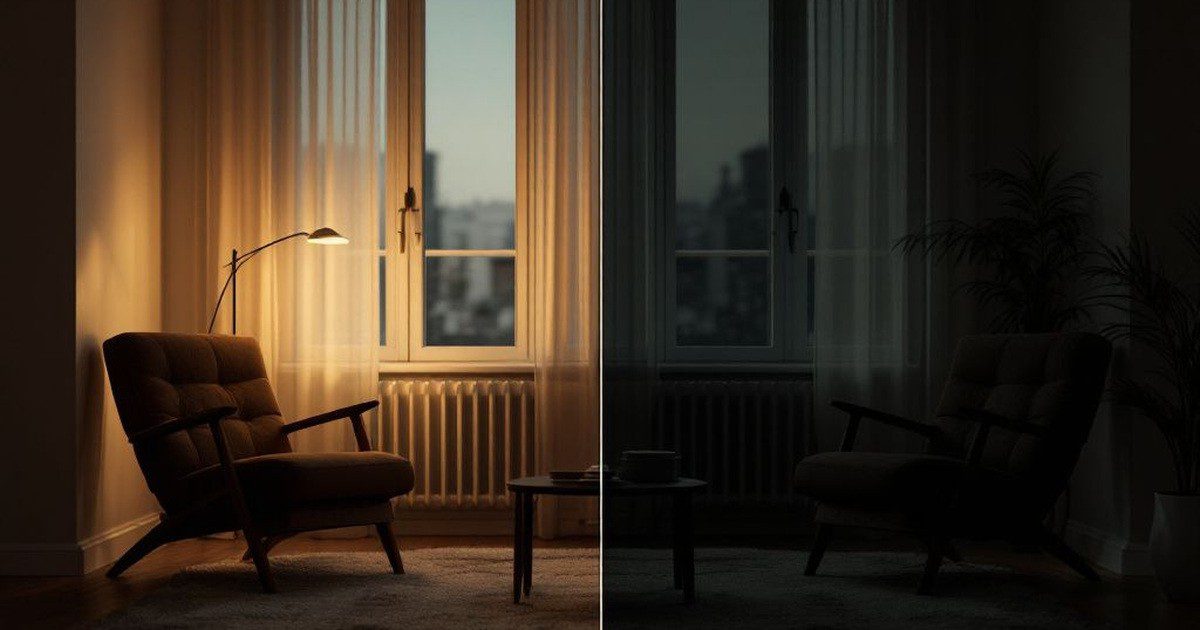
Evening light is the part that matters here. As daylight fades, the body raises melatonin, a hormone that rises through the evening, peaks in the early morning, and is thought to promote sleep. Bright artificial light late in the evening can prevent that release. You have been sitting under a lamp bright enough to read by, and as far as the system reading that light is concerned, the day has not ended.
Pressure, not just timing
The second system is cruder and easier to feel. While you are awake, a compound called adenosine accumulates in the brain, and rising levels signal a shift toward sleep. The longer you have been up, the heavier that pressure becomes. It is why a short afternoon nap can leave you wide awake at midnight: you spent some of the pressure early.
This is also where coffee enters. Caffeine blocks adenosine — it does not remove the pressure, it hides the signal. You have been feeling alert for the last hour on borrowed terms, and the debt is still there when the drug wears off.
Working with a system you did not design
None of this makes an evening routine a cure for anything, and plenty of people cannot choose their hours at all. Shift work and travel across time zones pull the clock out of alignment for straightforward structural reasons, not personal ones. Most people’s natural cycle also runs slightly longer than twenty-four hours, and genuine differences in preference exist: some people really are at their best late.
What the science supports is more modest and more useful. Consistent timing, daylight early, and less bright light in the last hour give the two systems a clearer signal. If you have been trying to fall asleep earlier without changing what your evening looks like, you have been arguing with a mechanism that only listens to light and to time awake.
Adapted from NHLBI, “Sleep/Wake Cycle”.
GRAMMAR FOCUS
Present Perfect Continuous
have / has + been + verb-ing
Use the present perfect continuous to connect an earlier activity with the present. It draws attention to the activity or its duration rather than a completed result.
- An activity still going on now: the action began earlier and continues.
“She has been studying since eight this morning and has not stopped for lunch.”
“They have been waiting at the gate for over an hour.”
- Recent repeated activity: several occurrences help explain the present situation.
“I have been sleeping badly, which is why I keep losing my thread.”
“He has been traveling a lot this month, so the apartment looks neglected.”
- Duration: use for for an amount of time and since for a starting point.
“We have been living in this building for three years.”
“The team has been working on the redesign since April.”
Discuss the ideas
Work through the discussion questions on your own, or with a teacher or partner.
- Describe an evening routine you have been changing recently. What prompted the change, and how is it going?
- Do you consider yourself a night owl or an early riser? How well does your actual schedule match that preference?
- This lesson describes light and sleep pressure as systems that ignore your intentions. Where else in daily life do you notice your body working on its own schedule?
- Some people cannot choose their working hours at all. What could an employer reasonably do to reduce the cost of shift work?
- If a friend told you they had been sleeping badly for months, what would you ask before offering any advice?
What this sleep/wake cycle English lesson developed
In this B2 English lesson on the sleep/wake cycle, you followed light and sleep pressure through a familiar evening, built vocabulary for cycles, peaks, and consistency, and practiced the present perfect continuous to describe routines you have been building or breaking.
Next lesson: Continue with Yoga Beyond Being Flexible to see what the research actually measures when it studies a physical practice.
CONTINUE PRACTICING
Continue with the slide collection
Turn this lesson into a class-ready sequence with a warm-up, guided vocabulary practice, dedicated activities for the present perfect continuous and TOEFL Take an Interview speaking, reading and listening practice, and brief teacher notes with suggested timing and learning objectives.
Explore the lesson deck →